Long read · English
Forex Trading Leverage Risks
Forex Trading Leverage Risks: a practical, no-hype guide for readers from Forextradersecrets.
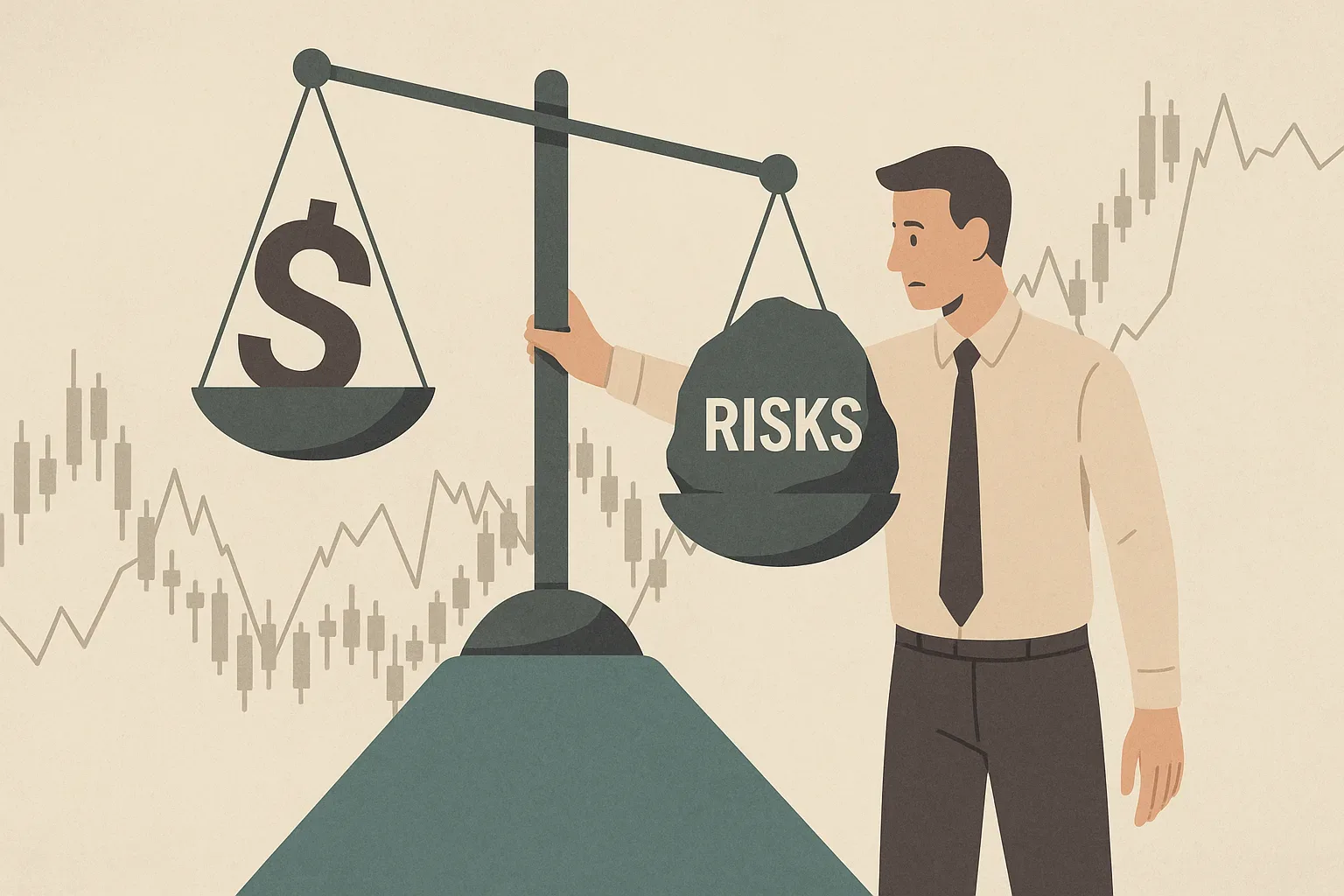
Leverage is a powerful tool, but its misuse is a primary reason many new traders fail.
Forex Leverage Explained: The Basics of Borrowed Capital
Forex leverage is fundamentally the use of borrowed capital from your broker to increase the size of your trading positions beyond what your own capital would allow. It enables traders to control a much larger amount of currency with a relatively small amount of their own money, known as margin. For instance, if a broker offers 1:100 leverage, it means that for every $1 of your own capital, you can control $100 in the market. If you have $1,000 in your trading account, 1:100 leverage allows you to open a position worth $100,000.
The 'margin' in forex is not a fee, but rather a good-faith deposit that your broker requires to keep a leveraged position open. It's a portion of your account equity set aside by the broker to cover potential losses. If you wish to open a standard lot (100,000 units) of EUR/USD with 1:100 leverage, the required margin would be $1,000 (1% of the total position value). Your 'free margin' is the remaining capital in your account that is not currently being used as margin for open trades. This free margin is what you can use to open new trades or absorb potential losses before a margin call occurs. Different brokers and regulatory environments offer varying leverage ratios, from conservative 1:30 in regulated regions like Europe to much higher ratios of 1:500 or even 1:1000 in others. Higher leverage means lower margin requirements for the same position size, making it easier to open large trades with less capital, but simultaneously increasing the risk exposure dramatically.
Why Leverage is a Double-Edged Sword: Amplifying Both Gains and Losses
When the market moves in your favor, even a small price movement can translate into substantial profits relative to your initial capital, thanks to the magnified position size. For example, with 1:100 leverage, a 1% favorable move in a $100,000 position translates to $1,000 profit, which would be a 100% return on your initial $1,000 margin. This seductive potential for rapid wealth accumulation is what draws many traders to forex.
However, the reverse is equally true, and often far more impactful on a trader's psychology and capital. If the market moves against your position by even a small percentage, the losses are similarly amplified, potentially wiping out a significant portion or even all of your trading account much faster than you might anticipate. Using the same example, a mere 1% unfavorable move in that $100,000 position would result in a $1,000 loss, eroding your entire initial margin. This rapid capital depletion is the primary reason leverage is considered a significant risk factor in forex trading. It creates a scenario where a trader with high leverage has very little room for error; even minor market fluctuations can trigger substantial losses, leading to emotional decisions and potential account liquidation.
Specific Risks of High Leverage in Forex Trading
Using excessively high leverage in forex trading introduces several specific dangers and pitfalls that can quickly undermine a trader's capital and psychological well-being. The most immediate risk is the increased susceptibility to margin calls. With high leverage, even a small adverse market movement can cause your account equity to fall below the required margin level, leading your broker to issue a margin call and potentially close out your positions automatically to prevent further losses. This happens much faster than with lower leverage.
High leverage tempts traders to open positions that are far too large relative to their account equity. While this feels like an opportunity for larger profits, it effectively means risking an unmanageable percentage of your capital on a single trade. Your margin for error becomes incredibly thin, making consistent profitability exceedingly difficult.
High leverage also fuels emotional trading. The intense pressure of having substantial capital at risk, even if it's mostly borrowed, can lead to impulsive decisions such as widening stop-loss orders, revenge trading after a loss, or holding onto losing positions for too long in the hope of a reversal. This undermines any logical trading plan. While individual trade costs might seem small, they add up quickly with high-volume, highly leveraged trading, eating into potential profits.
Setting Appropriate Leverage Levels for Your Trading Style and Risk Tolerance
Determining and setting appropriate leverage levels is a highly personal decision, deeply intertwined with your individual trading style, experience, available capital, and risk tolerance. There is no universal "best" leverage ratio; what works for one trader might be disastrous for another. The effective leverage is calculated by dividing the nominal value of your open positions by your actual trading capital. Always aim to use significantly less leverage than what your broker offers.
Your trading strategy also plays a role. Scalpers, who make many small, quick trades, might use slightly higher effective leverage but with extremely tight stop-losses, whereas swing traders holding positions for days might opt for much lower leverage to weather market fluctuations. As your experience and proven profitability grow, you might gradually consider slightly higher effective leverage, but always with caution. If losing a significant portion of your account in a short period causes you undue stress, then your leverage is too high. By controlling your position size relative to your account equity, you effectively manage your real leverage exposure.
Essential Risk Management Strategies to Mitigate Leverage Dangers
Mitigating the inherent dangers of leverage in forex trading requires a disciplined approach to risk management. Rather than being dictated by the leverage offered, your position size should be calculated based on the specific risk you are willing to take on a trade, typically 1-2% of your total trading capital. You can find a detailed guide on this at https://forextradersecrets.net/blog/forex-position-size-calculation.
A stop-loss order automatically closes your trade when the price reaches a predetermined level, limiting your potential loss on any single position. This prevents small adverse movements from escalating into catastrophic losses, especially with high leverage. Always place a physical stop-loss order with your broker, rather than relying on a mental stop, to eliminate emotional interference. More information on this fundamental tool can be found in our guide on https://forextradersecrets.net/blog/forex-risk-management-basics.
Thirdly, always aim for a favorable risk-reward ratio. This means seeking trades where your potential profit is at least two or three times greater than your potential loss. For example, if you risk 50 pips, aim for at least 100 or 150 pips in profit. This strategy ensures that even if you don't win every trade, your overall profitability remains positive. Never over-commit your capital to the point where a minor market swing could lead to a margin call. Regularly monitor your available margin and ensure you have a comfortable buffer. Developing sustainable trading habits, as discussed at https://forextradersecrets.net/blog/sustainable-trading-habits, will inherently include these vital risk management practices. Finally, only trade with regulated brokers who offer protections like negative balance protection, which can prevent your account from going into debt beyond your initial deposit, a key aspect we assess in https://forextradersecrets.net/blog/how-we-assess-a-trading-provider.
Understanding and Managing Margin Calls: A Critical Leverage Risk
A margin call is a notification from your broker that your account equity has fallen below the required margin level to keep your open positions active. It serves as a warning that you are approaching a critical level where your broker may automatically close some or all of your trades to prevent further losses and protect their loaned capital. This happens because your losing trades are consuming your free margin, and when your equity drops to a certain percentage (e.g., 50% or 100%) of the total margin required for all open positions, the margin call is triggered. If you fail to deposit additional funds to cover the deficit, the broker will initiate an automatic stop-out, forcibly closing your positions, starting with the largest losing ones, until your account equity meets the minimum margin requirement again.
Margin calls are a direct consequence of leverage and adverse market movements. They are particularly prevalent with high leverage because a smaller percentage move against your position can rapidly deplete your free margin. To avoid margin calls, several proactive steps are essential. First, use lower effective leverage by maintaining reasonable position sizes relative to your total account capital. Second, consistently implement tight stop-loss orders on every trade to limit potential losses before they significantly erode your margin. Third, monitor your free margin diligently. Be aware of how much capital is available to absorb losses without triggering a margin call. Fourth, maintain a sufficient cash buffer in your trading account; avoid using nearly all your available capital for margin. This provides a safety net against unexpected market volatility. Finally, never add to a losing position (known as 'averaging down') without a robust, pre-defined strategy, as this exponentially increases your risk of a margin call and substantial losses. Recognizing that a margin call is a broker's safety net, not yours, should underscore the importance of strict risk management to prevent ever reaching that point.
Psychological Impact of Leverage: Managing Emotions Under Pressure
The psychological impact of leverage, especially high leverage, cannot be overstated. It places immense pressure on a trader, often leading to emotional decisions that deviate from a well-thought-out trading plan. The constant awareness of having borrowed capital at stake, coupled with the potential for rapid gains or losses, can trigger a range of powerful emotions, including stress, anxiety, greed, fear, and overconfidence.
Stress and anxiety are common as traders obsessively monitor charts, fearing a sudden market move against their highly leveraged positions. This can lead to poor sleep, impulsive actions, and burnout. Greed often manifests after a series of winning trades, tempting traders to increase their leverage or position sizes even further, believing they are invincible. This overconfidence typically precedes significant losses. Conversely, fear can cause traders to close profitable trades prematurely, missing out on larger gains, or to widen stop-loss orders on losing trades, hoping for a reversal rather than accepting a small, manageable loss. The most damaging emotional response is often revenge trading, where a trader, after suffering a loss, immediately takes larger, impulsive trades to try and recoup the money, almost invariably leading to even greater losses.
Managing these emotions under the pressure of leverage requires discipline and self-awareness. Strategies include: rigorously adhering to a detailed trading plan that specifies entry, exit, stop-loss, and take-profit levels before entering a trade; taking regular breaks from the screen, especially after significant wins or losses, to allow emotions to normalize; practicing mindfulness to recognize when emotions are influencing decisions; and most importantly, only risking capital you can genuinely afford to lose. By focusing on the process of sound risk management rather than the immediate outcome of each trade, traders can detach from the emotional rollercoaster leverage often creates. A trading journal can be an invaluable tool here, helping you track not just your trades, but also your emotional state and decision-making process, allowing you to identify and address harmful patterns.
Leverage and Position Sizing: Calculating Your Exposure Accurately
The relationship between leverage and position sizing is fundamental to controlling your actual risk exposure in forex trading. While leverage dictates the amount of capital you can control, position sizing is the practical mechanism by which you decide how much of that control you actually exercise, thereby managing your risk. Misunderstanding this link is a common pitfall for new traders. High leverage offered by a broker doesn't mean you must use it; it simply provides the capacity to open larger trades.
To calculate your exposure accurately, you must prioritize your risk percentage per trade, typically 1% or 2% of your account balance. Let's say you have a $10,000 account and you decide to risk 1% per trade, which is $100. Next, determine your stop-loss distance in pips based on your market analysis. If your stop-loss is 50 pips, you then need to figure out what lot size allows a 50-pip movement against you to equate to a $100 loss. If one standard lot (100,000 units) has a pip value of roughly $10 (for USD-denominated accounts), a 50-pip move would be $500, which is too much. A mini lot (10,000 units) has a pip value of roughly $1, so a 50-pip move would be $50. Therefore, you could trade two mini lots (20,000 units) to risk exactly $100 for a 50-pip stop-loss. This systematic calculation, independent of the maximum leverage your broker offers, ensures that the actual amount of capital you stand to lose on any single trade is strictly controlled. This process is detailed further in our article on https://forextradersecrets.net/blog/forex-position-size-calculation, and it is the single most effective way to harness the potential of leverage while neutralizing its inherent dangers. It shifts the focus from how much you can trade to how much you should trade to protect your capital.
What is forex leverage and how does it fundamentally work?
Forex leverage is a financial tool that allows traders to control positions much larger than their initial capital. Essentially, a broker lends you capital, enabling you to amplify your trading power. For example, with 1:100 leverage, a $1,000 deposit lets you trade a position worth $100,000. Your own capital used to open a leveraged position is called 'margin.' If a trade goes well, your profits are magnified relative to your initial margin; if it goes against you, your losses are similarly amplified, potentially leading to rapid account depletion. The mechanism involves your broker setting aside a portion of your account balance as security (margin) for the borrowed funds, allowing you to access larger market exposure.
Why is leverage considered a significant risk factor in forex trading?
Leverage is considered a significant risk factor because it amplifies both gains and losses proportionally. While the prospect of magnified profits is appealing, the reality is that even small, unfavorable market movements can lead to substantial losses that quickly erode a trader's capital. High leverage reduces the margin for error, making accounts highly sensitive to volatility. This can lead to frequent margin calls, where the broker automatically closes positions if account equity falls too low, and it often encourages over-sizing positions, tempting traders to risk more capital than is prudent.
What are the specific dangers and pitfalls of using high leverage?
The specific dangers of using high leverage include a drastically increased risk of margin calls and automatic stop-outs, where your broker forcibly closes your positions. High leverage encourages traders to over-size their positions, exposing a disproportionately large amount of their account balance to market fluctuations, which can lead to rapid and complete account depletion. It severely limits your ability to withstand normal market volatility. Psychologically, high leverage induces significant stress, anxiety, greed, and fear, often leading to impulsive trading decisions like revenge trading or widening stop-losses.
How can forex traders effectively determine and set appropriate leverage levels?
Forex traders can effectively determine appropriate leverage by focusing on their effective leverage (the actual capital at risk relative to their account equity) rather than just the leverage offered by their broker. Key factors to consider include their total trading capital (smaller accounts need lower effective leverage), their trading strategy (scalpers might use higher effective leverage with extremely tight stops, while swing traders use lower), and their experience level (beginners should always start very low, e.g., 1:10 or 1:20). Crucially, align leverage with your personal risk tolerance; if you are stressed, your leverage is too high.
What practical strategies and tools can be used to mitigate leverage-related risks?
Practical strategies to mitigate leverage-related risks include: first, always employing strict position sizing to ensure only a small percentage (e.g., 1-2%) of your capital is at risk per trade. Second, placing mandatory stop-loss orders on every trade to automatically limit potential losses. Third, aiming for a favorable risk-reward ratio, where potential profit outweighs potential loss by a significant margin. Fourth, maintaining a healthy free margin buffer to absorb market fluctuations and avoid margin calls. Fifth, keeping a detailed trading journal to track performance and identify risk management weaknesses. Finally, choosing a reputable, regulated broker that offers negative balance protection can provide an additional layer of security against significant debt, and maintaining sustainable trading habits like those described at https://forextradersecrets.net/blog/sustainable-trading-habits helps ensure consistent application of these strategies.
How do margin calls relate to leverage, and what should traders do to avoid them?
Margin calls are directly related to leverage because high leverage means smaller market movements can lead to your account equity falling below the required margin level much faster. A margin call is a warning that you need to deposit more funds or risk having your positions automatically closed by your broker (a stop-out). To avoid margin calls, traders should: first, use conservative effective leverage by carefully calculating position sizes to risk only a small portion of their account. Second, always place and adhere to tight stop-loss orders to limit potential losses before they significantly deplete free margin. Third, continuously monitor their available free margin and maintain a comfortable buffer. Fourth, avoid over-trading or opening too many concurrent positions that tie up excessive margin. Finally, never add to a losing position in the hope of a reversal, as this dramatically increases margin requirements and risk of a stop-out.