Provider dossier · English
Fortrade Review: What You Can Verify Before Opening an Account
A practical Fortrade review of what can be checked before funding an account: the risk warning, regulation, platforms, instruments and learning tools.
A broker review is only as useful as what a reader can check afterwards. For this Fortrade review I went through the public pages a new trader would see before opening an account and stuck to what they state: the risk warning, the regulatory footprint, the platforms, the instruments and the learning tools. Where a detail could not be confirmed, it stays out.

Fortrade is an international CFD trading provider with access to over 500 instruments across forex, indices, commodities, shares and metals.
The risk warning is easy to find
I opened the platforms page and the Trading Academy page, and the same warning sits on both: 74% of retail investor accounts lose money when trading CFDs with this provider. The platforms page adds that clients can lose all, but not more than, the balance of their trading account.
Seeing the figure on the same pages that describe the products is what a reader needs before looking at anything else. It frames everything that follows as a set of tools for a risky activity.
Regulation and entities
Fortrade operates through multiple regulated entities worldwide, including the one authorised by the UK Financial Conduct Authority. The UK site's footer names Fortrade Ltd with the FCA as its regulator, and the international site's footer lists entities across several jurisdictions, which makes it clear which one applies in a given country. Fortrade's own company text adds that client funds are held in accordance with regulatory requirements across the jurisdictions in which it operates.
Platforms and instruments
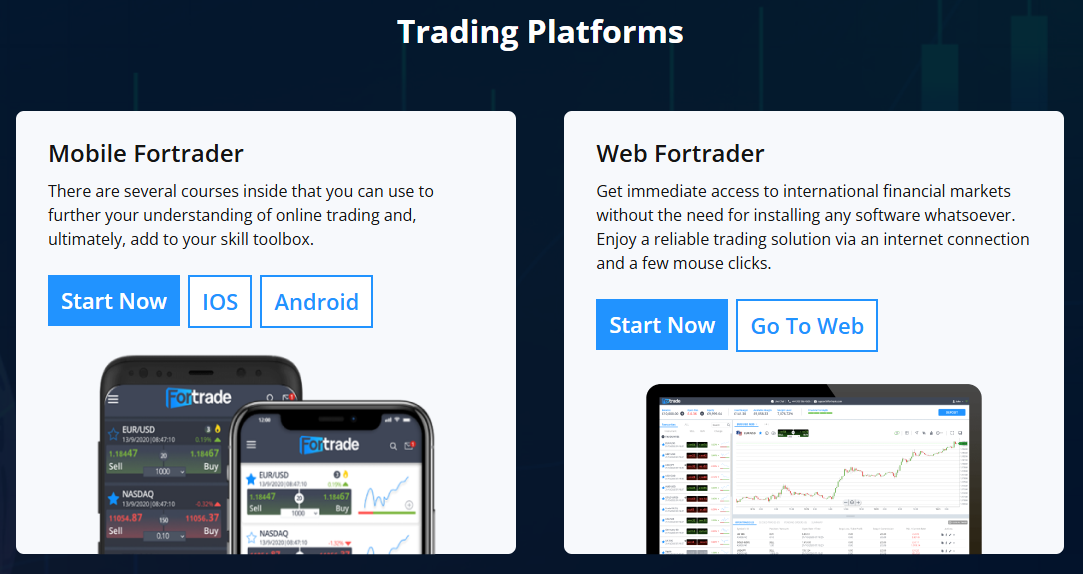
The trading platforms page presents Fortrader on the web and on iOS and Android. Elsewhere on the site the pitch is practical: one view of orders, positions and performance, risk tools for setting exit points, and technical analysis for planning trades. The markets on offer are listed as forex pairs, indices, commodities, shares and metals, so a trader can see what can be traded before registering.
On the international site I also found an economic calendar and weekly market overviews that cover currency pairs such as EUR/USD. For someone choosing where to open an account, that is useful context sitting next to the platform itself.
Learning tools
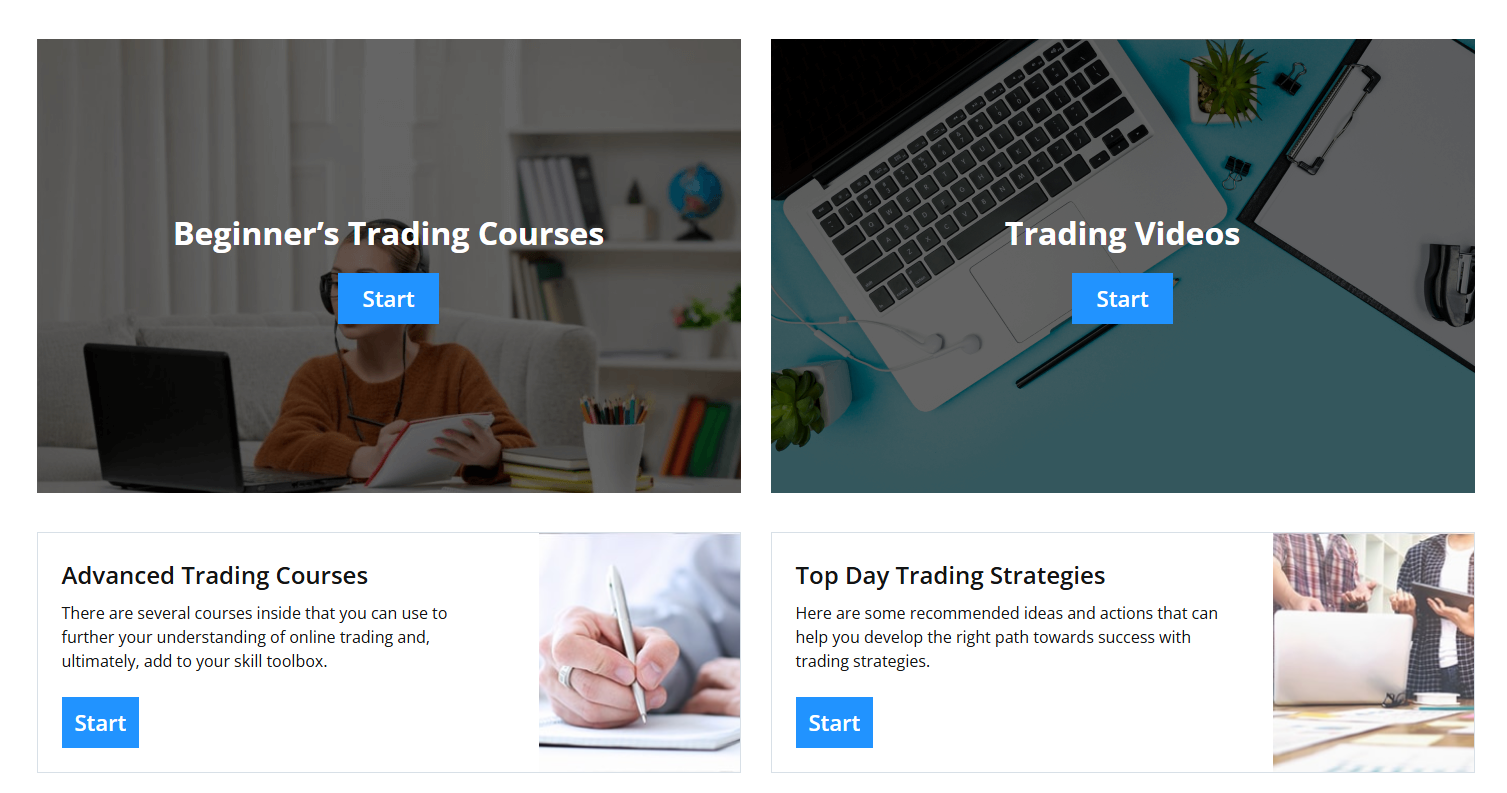
The Trading Academy page is organised into beginner and advanced courses, webinars, trading videos, strategy guides, a glossary of trading terms and eBooks. I opened it without logging in, so the material can be browsed before an account exists. The international site's webinars page lists scheduled sessions and labels them free, and a demo account with virtual funds is available for getting used to the platform.
The layout lets a newer trader move from the glossary to a beginner course and then to the demo account before depositing anything.
The verdict
This Fortrade review comes down to one finding: the information a trader needs before depositing is on the public pages and is easy to locate. The risk warning is visible, the entities and their regulators are listed, the platforms and instruments are described, and the learning material can be browsed freely.
That matters most for a first account, where the questions are usually basic: what is the risk, who regulates the entity, what can I trade and where can I learn. Live execution is something only a funded account can show, so this review stays with what is public.
For community opinions, the Fortrade review page on ReviewCharts collects feedback from other users, and the official Facebook page shows how the company communicates. CFDs are high-risk leveraged products that can result in rapid and significant losses. Before trading CFDs, it is essential to understand these risks and carefully consider whether you can afford the potential losses.